Mero Share vs DEMAT Account: Difference Explained
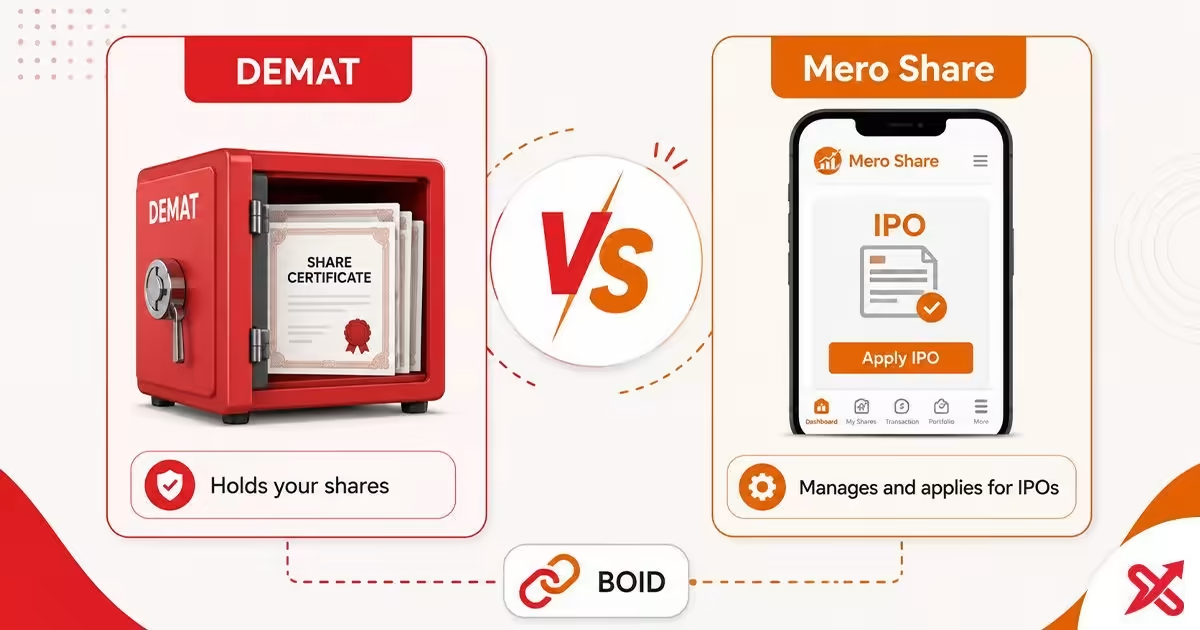
DEMAT and Mero Share are two separate things that work together. A DEMAT account holds your shares electronically and gives you a 16-digit BOID. Mero Share is the CDSC online portal you use to manage that account, apply for IPOs, and transfer shares. The difference between a Mero Share and a DEMAT account comes down to one job each, and you need both, because one opens only through the other.
The confusion starts with bank marketing. Your bank or broker usually creates the Mero Share login at the same time it opens the demat account, so the two feel like one product. They serve different jobs, and knowing which one does what saves you from first-day panic in My ASBA.
This page compares the two across what they are, who issues them, what they cost and what each one cannot do. You will also find the verified 2026 fee figures and a dated count of Nepali investors using each system. If the acronyms are new to you, the Mero Share terms explained guide defines BOID, DP, EDIS and C-ASBA before you compare the accounts.
💡 Key Takeaways
- Know which account stores your shares and which one manages them, so the two never get confused.
- Apply for IPOs and FPOs with the verified 2026 CDSC fees for both accounts.
- See why the broker/TMS account is a separate third option you only add when you trade listed shares.
Is Mero Share the Same as a DEMAT Account?
No, and this is the most common question new investors ask. A DEMAT account is the electronic vault where your shares live. Mero Share is the website and app you open to work with those shares.
Think of a bank account and its mobile app. The account holds the money. The app lets you check the balance and transfer funds. The demat is the account, Mero Share is the app, and each one fails without the other.
Bank advertisements usually blur the line. An ad that promises Mero Share free with a new demat account sounds like one product with a bonus. Your DP opens the demat first and then registers the portal login, which makes the two look identical when they serve different layers.
The numbers show the scale of both systems. CDSC reports about 8,009,623 demat accounts and 7,096,083 registered Mero Share users, with 5,148,893 active as of August 2026. One system stores the shares, the other manages them.
What Is a DEMAT Account?
DEMAT is short for dematerialized, which means your shares exist as electronic records instead of paper certificates. A licensed Depository Participant, or DP, opens the account for you. Banks, merchant bankers and stockbrokers all act as DPs.
The account holds every scrip you own, from IPO allotments to shares you buy later. CDSC assigns a 16-digit Beneficiary Owner Identification Number, or BOID, to the account when it opens. The same number later becomes your Mero Share username.
Your DP runs the paperwork. It verifies your documents, opens the account, hands you the BOID and issues the Mero Share login. Pick a DP you can reach easily, because renewals and document updates run through it.
Older investors remember share certificates as printed paper. Dematerialization moved those certificates into the depository, so the demat account now holds the electronic record of your ownership. That record is what Mero Share reads when it shows your portfolio.
What Is Mero Share?
Mero Share is the online portal that CDS and Clearing Limited (CDSC) runs for investors in Nepal. You log in through the official Mero Share portal or the mobile app to apply for IPOs, FPOs and right shares, view your portfolio, check application results and authorize share deliveries after a sale.
It sits on top of your demat account, so it does not hold shares on its own. Your DP issues the login, and your BOID is the username. The mobile app launched in 2022 and CDSC publishes it, so check that publisher name before you install.
Mero Share also records your weighted average cost of capital, or WACC, under My Purchase Source. That confirmed figure becomes your cost basis for capital gains tax when you sell. Work out your true weighted average cost, broker fees included, with the SajiloX WACC calculator.
The one job Mero Share does not do is trading. Applying for new issues, viewing holdings and authorizing EDIS transfers all happen here. Buying and selling shares already listed on NEPSE needs a broker/TMS account, covered below.
Mero Share vs DEMAT: Side-by-Side
The table below places the two accounts next to each other. The broker/TMS account is added as a third column because traders meet it as soon as they want to sell listed shares.
| DEMAT account | Mero Share | Broker / TMS account | |
|---|---|---|---|
| What it is | Electronic record of your shareholdings | Online portal run by CDSC | Trading platform run by a licensed stockbroker |
| Who issues it | Your Depository Participant (DP) | CDSC, opened through your DP | Your stockbroker |
| What it does | Holds your shares and issues your 16-digit BOID | Applies for IPOs, FPOs and right shares, shows your portfolio, authorizes EDIS transfers | Buys and sells listed shares on NEPSE |
| Cost | Rs 100 annual maintenance charge | Rs 50 registration plus Rs 50 annual renewal | Broker commission per trade |
| What you cannot do with it | Apply for IPOs or trade shares | Buy or sell listed shares | Hold your shares, since most issues land in your demat |
Fees come from the CDSC annual-fee notice 2083-04-01, dated July 17, 2026. The DEMAT annual maintenance charge is Rs 100, Mero Share registration is Rs 50 and the annual renewal is Rs 50, so a full renewal costs Rs 150 combined.
Both accounts need an annual renewal. Skip it and the account shows expired, which blocks new applications and share transfers until you pay. The demat renewal runs through your DP, and the Mero Share renewal happens in the portal itself. Follow the steps to renew both before the expiry date.
The renewal amount appears in the portal before you pay, so check it against the notice before confirming. Keep the payment receipt, because your DP asks for proof if a renewal dispute ever comes up.
Do You Need Both?
Yes, for anyone who applies for IPOs and FPOs. The workflow proves it. You submit an application through Mero Share, your bank blocks the money, and on allotment the shares credit to your DEMAT account.
The demat receives the shares the bank releases. Mero Share delivers the application that starts the process. Each account covers a different half of the same journey, so skipping one closes the route.
A first-time applicant needs three things on the day of issue:
- A registered Mero Share login.
- A working C-ASBA link at the bank.
- An active demat account to receive the allotment.
Missing any one of the three turns a lottery win into a problem.
After an IPO closes, you check the lottery result on the official result portal using your BOID. Allotted shares land in your demat, and the application record stays in Mero Share. The same BOID ties both records together.
The two accounts do not compete with each other, because each one does a job the other cannot. The real decision is what you add on top, and the broker account is the main extra.
The Third Account: Broker / TMS
A broker or TMS account lets you trade shares that are already listed on NEPSE. You open it with a licensed stockbroker, and its trading platform is where buy and sell orders happen.
IPO-only investors do not need it. The demat and Mero Share cover applications and holdings from start to finish. Traders add the broker account on top, and that is where trading costs appear.
Broker commission, securities tax and capital gains tax all sit on the trading side. Before you place a trade, price the full cost with the SajiloX Share Calculator, fees and capital gains tax included. The break-even figure changes your entry decision.
How the BOID Connects the Two
The 16-digit BOID is the hinge between the demat and Mero Share. Your DP issues it the day the demat account opens, and you type the same number as your username when you log in to Mero Share. The terms explained guide shows where to find it inside the app.
The connection also explains a common login snag. If the portal rejects your username, check that you picked the right DP in the dropdown and typed the full 16-digit BOID without gaps. Troubleshoot the login errors in the Mero Share login guide.
Keep the BOID private like your PIN. Anyone with your BOID and password can view your portfolio and submit applications. It is the single number that ties your identity to both accounts.
Both accounts run inside the same CDSC depository, so the confusion clears once you see the two layers working. You open the demat at a bank or broker, then register the Mero Share login through that same DP. Renewals, fees and expiry dates follow the yearly cycle covered in the Mero Share renewal guide. For the forms, remember that Nepali dates run on the Bikram Sambat calendar, and the Nepali Date Converter translates your date of birth and your age with the Nepali Age Calculator before you submit the paperwork.
Frequently Asked Questions
Is Mero Share the same as a DEMAT account?
No. A DEMAT account holds your shares electronically and gives you a 16-digit BOID. Mero Share is the CDSC online portal you use to manage that account and apply for IPOs.
Can I use Mero Share without a DEMAT account?
No. Mero Share access opens through your DP only after the DEMAT account exists, and your BOID is the login.
Do I need both DEMAT and Mero Share?
Yes. You need the DEMAT account to hold shares and Mero Share to apply for IPOs and manage them. The two work together throughout the process.
Which is better, DEMAT or Mero Share?
Neither replaces the other. The DEMAT is the storage, Mero Share is the interface. Investors who want IPOs use both together.
Can I buy and sell shares on Mero Share?
No. Mero Share is for IPO applications and portfolio management. Buying and selling listed shares on NEPSE needs a broker/TMS account.
What does a DEMAT account cost?
Opening is often free or up to Rs 200, and the annual maintenance charge is Rs 100 per the CDSC annual-fee notice of 2083-04-01, dated July 17, 2026.
What does Mero Share cost?
Mero Share registration is Rs 50 and the annual renewal is Rs 50. You also keep the DEMAT renewal at Rs 100, for Rs 150 combined.
How is my BOID connected to both?
Your DP issues the 16-digit BOID when your DEMAT opens, and you use that same BOID as your Mero Share login. It is the number that links the account to the portal.

SajiloX
SajiloX creates practical online tools and guides for everyday digital tasks. Our content includes step-by-step tutorials, useful comparisons, and clear explanations designed to help you complete tasks and make informed choices. We focus on accurate, practical information, with testing and verification included when applicable.


